

The name “begonia” comes from the French botanist Michel Bégon, who was the governor of the island of San Domingo. In Poland, this plant is also known as ukośnica, a name referring to the asymmetrical shape of its leaves. Thanks to extensive breeding work, more than 1,500 begonia varieties have been developed!
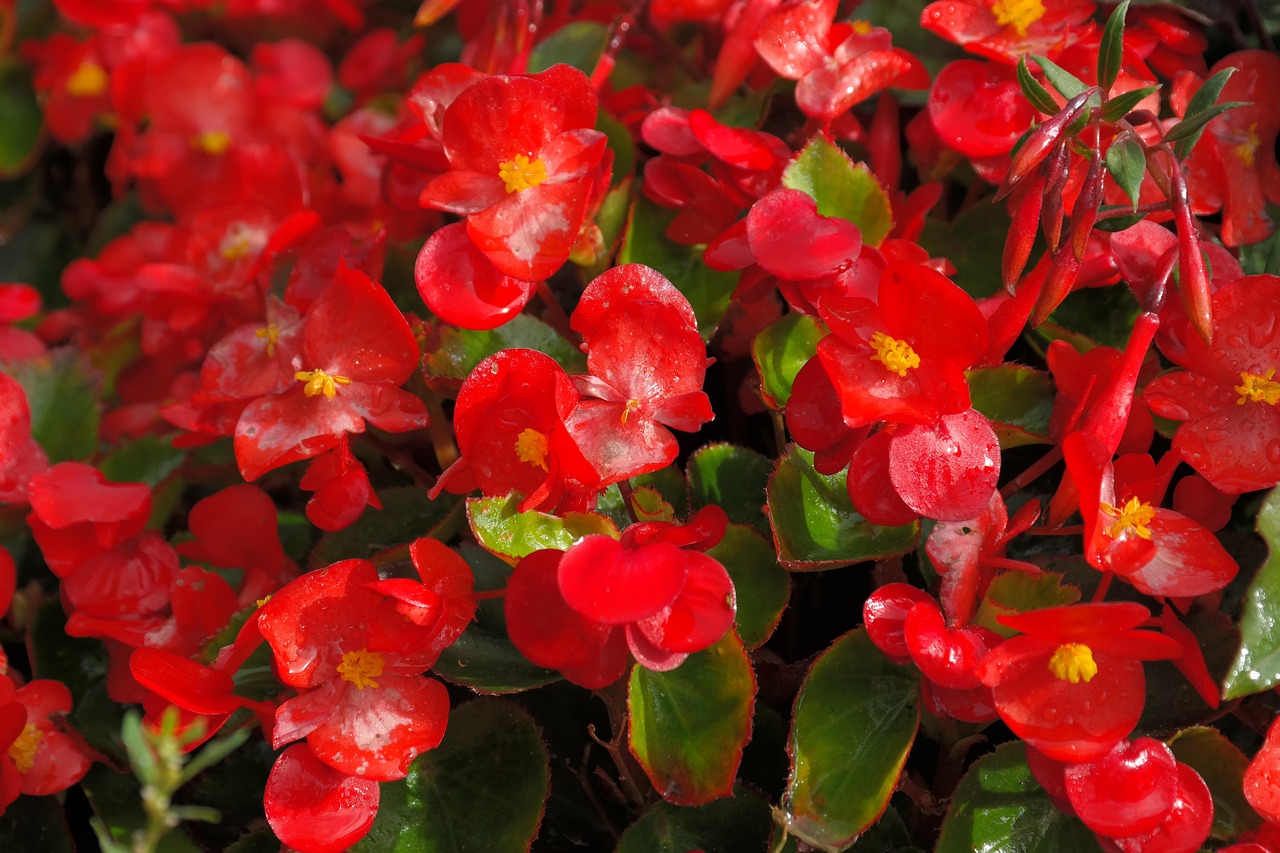
🌸 Begonia – species origin
Begonias naturally grow in tropical and subtropical regions of the world, with the greatest diversity found in South America. Among the popular species, we can distinguish:
✅ Wax begonia (Begonia semperflorens) – native to Brazil
✅ Rex begonia (Begonia rex) – grows wild in India and China
✅ Bolivian begonia (Begonia boliviensis) – originates from Bolivia
✅ Begonia cathayana – found in China
🌺 Tuberous begonia – species characteristics
Tuberous begonia (Begonia × tuberhybrida) is a hybrid resulting from the crossing of several South American species. It is distinguished by:
✔ Fleshy stems emerging from a dark brown tuber
✔ Lanceolate-heart-shaped leaves with slight fuzz on the underside
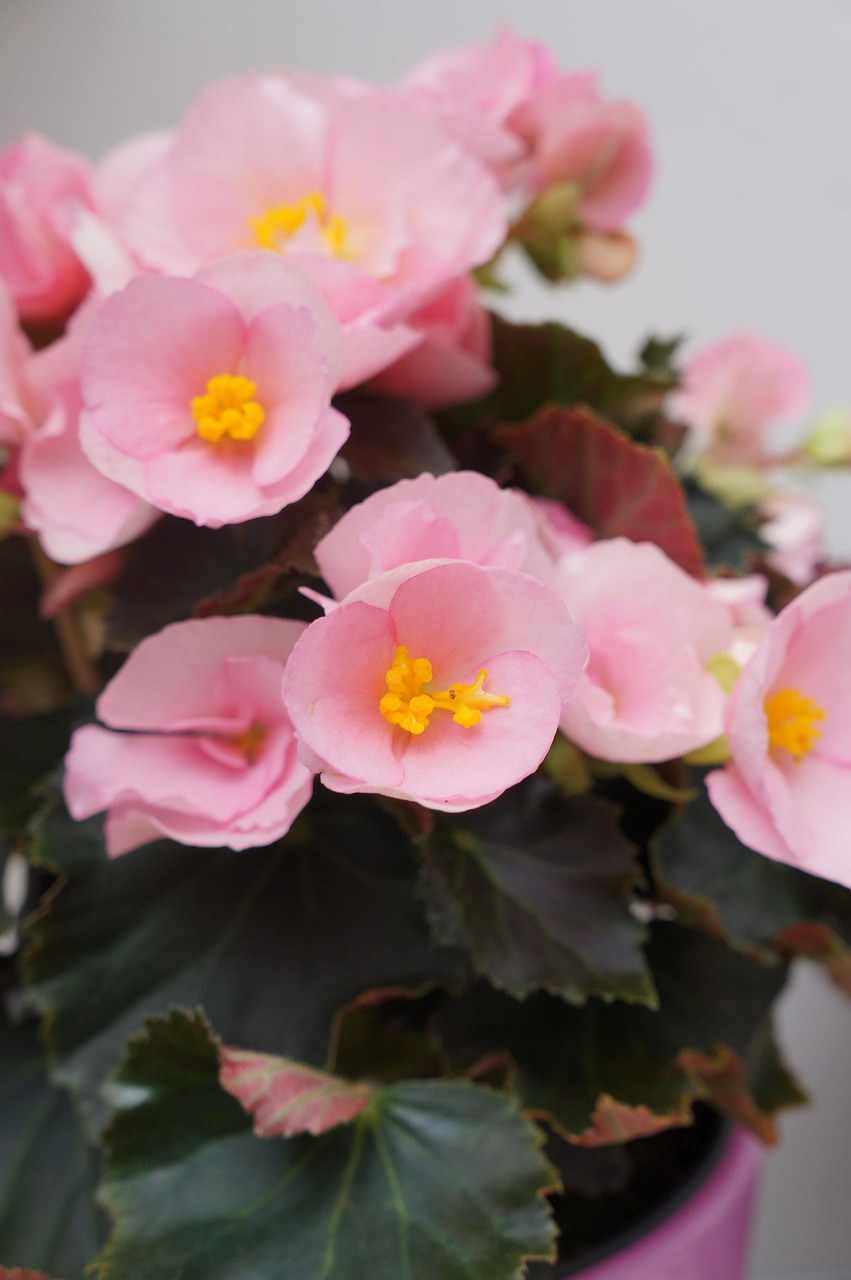
✔ Flowers ranging from 5 to 20 cm in diameter, available in a wide palette of colors — from white, pink, and red to various shades of yellow
The petals may vary in form: smooth, wavy, or fringed.
🌷 Types of Tuberous Begonias
Tuberous begonias can be divided into four main types:
1️⃣ Large-flowered (Begonia × tuberhybrida grandiflora)
This group includes varieties with:
-
Smooth, fringed, or wavy petals
-
Semi-double flowers
-
Fully double flowers, e.g.:
‘Double White’ (white) and ‘Double Red’ (red)
2️⃣ Medium-flowered (Begonia × tuberhybrida multiflora maxima)
Excellent for borders and containers. Recommended varieties include:
-
‘Smolicka Czerwona’
-
Nonstop F1 series: ‘Nonstop Yellow’, ‘Nonstop Rose’, ‘Nonstop Fire’
3️⃣ Small-flowered (Begonia × tuberhybrida multiflora)
Known for abundant flowering; perfect for balconies, terraces, and indoor displays.
4️⃣ Trailing tuberous begonias (Begonia × tuberhybrida pendula flore pleno)
Spectacular plants with cascading stems — ideal for hanging baskets.
🌟 Tuberous Begonias in the Garden and on the Balcony
Tuberous begonias are commonly grown in pots, window boxes, and hanging baskets, but they can also be cultivated directly in the ground.
🌸 Blooming period: May to September/October
🌿 They look best when planted in uniform, color-coordinated groups.
🪴 Trailing varieties are perfect for hanging containers and balcony railings.

With their wide range of colors and forms, these flowers make a beautiful decoration for your garden, balcony, or interior.
🌱 Growing Tuberous Begonias in Pots
📅 Planting time: February to March, to ensure flowering in May/June.
✅ Plant the tubers with the concave side facing upward, at a depth of 5–8 cm.
✅ Soil: fertile and well-draining.
✅ Watering: moderate — water only when the soil has dried out.
✅ Drainage: place a layer of expanded clay or ceramic shards at the bottom of the pot.
✅ Fertilizing: from spring to autumn with a fertilizer for flowering plants.
✅ Placing outdoors: only after May 15th, once the danger of frost has passed.
🌿 Growing Tuberous Begonias in the Garden
📅 Planting time: mid-May — after the last frosts.
☀ Location: depends on the variety:
-
Small-flowered begonias – prefer full sun.
-
Large-flowered and trailing begonias – prefer diffused or partial light.
🌿 Basic care:
✔ Regular watering — without wetting the leaves
✔ Weeding and fertilizing
✔ Protection from diseases and pests
🦠 Diseases and Pests of Begonias
🚨 Most common diseases:
✅ Downy mildew
✅ Grey mold
✅ Leaf spot diseases
🌿 Physiological disorders caused by nutrient deficiencies:
❌ Yellowing leaves
❌ Drying leaf edges
❌ Flower bud drop
🐜 Most common pests:
✅ Aphids
✅ Spider mites
✅ Fungus gnats (in container-grown begonias)
🌿 Propagation of Begonias
🌱 From seeds: sow from December to February; seeds require 22–24°C for germination.
🌿 Leaf cuttings: used for large-leaved begonia varieties.
🔪 Tuber division:
✔ Each divided tuber must have at least one well-developed eye.
✔ Seal the cuts with charcoal or a fungicide.
✔ After drying, plant the sections in pots filled with moist peat.
❄ Wintering Tuberous Begonias
1️⃣ After flowering, lift the tubers from the ground.
2️⃣ Dry and clean them; store in peat in a cool place.
3️⃣ In February, encourage sprouting by raising the temperature.

You may also like
-
 04/02
04/022025
The Ultimate Ranking of Low-Maintenance, Hard-to-Kill Houseplants
Lush potted plants are a stylish and eye-catching decoration that adds charm, warmth, and natural character to any interior. In addition, plants filter and ionize the air, regulate humidity levels, and — according to numerous studies — have a positive impact on our mood. Which houseplants should you choose for your home? Explore our guide below.Read more