
Ranunculus are herbaceous plants found almost all over the world — except in Antarctica and certain tropical regions. The genus includes more than 1,500 taxa, and 25 of them grow wild in Poland. 🌍

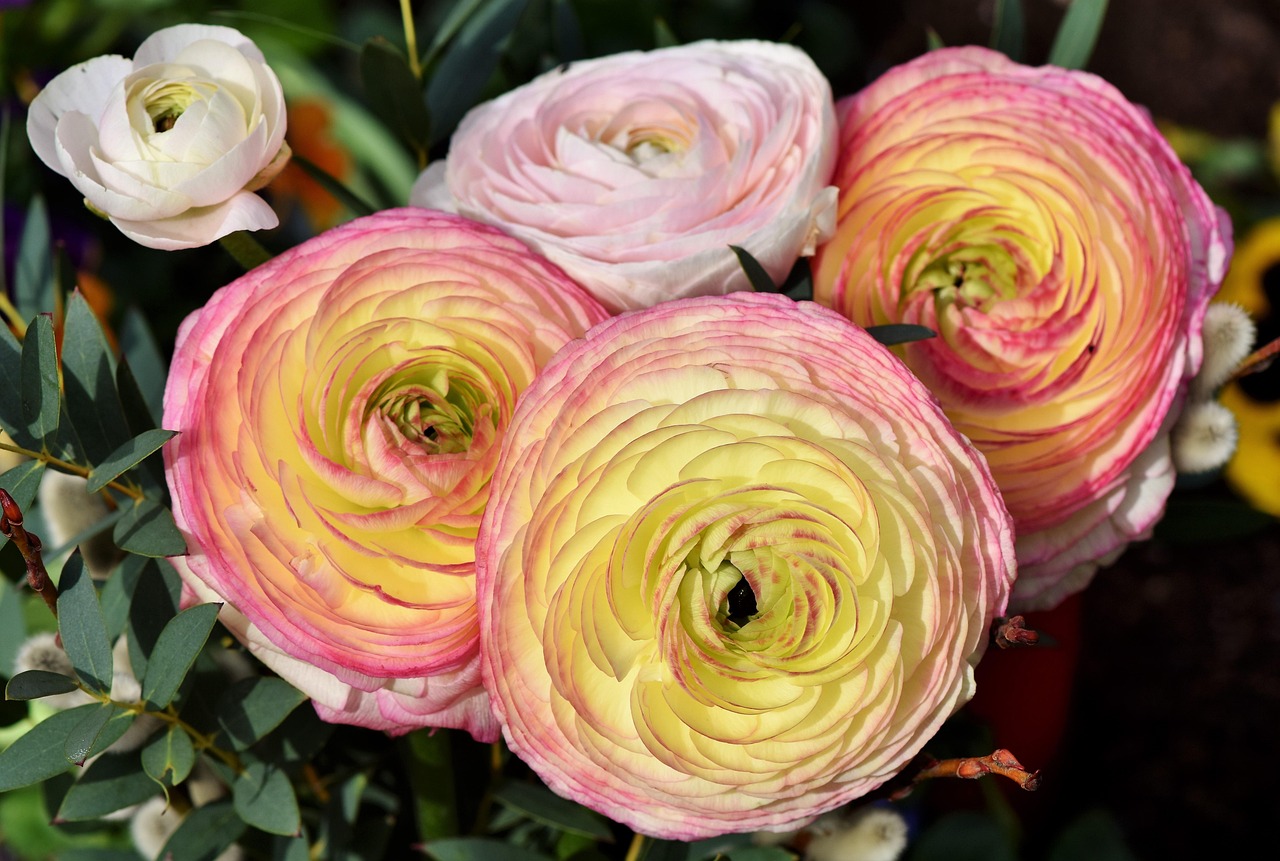
Ranunculus are herbaceous plants found almost all over the world — except in Antarctica and certain tropical regions. The genus includes more than 1,500 taxa, and 25 of them grow wild in Poland. 🌍
🐸 Where do ranunculus (Ranunculus) come from?
The natural habitat of ranunculus includes wetlands and peat bogs. Their Latin name comes from a word meaning “little frog” — not by accident, as both love moist environments! 🐸💦
The Persian buttercup (Ranunculus asiaticus L.) was first brought to Europe by Louis IX, but its tubers mysteriously disappeared. 🌺 It wasn’t until the era of Elizabeth I that they were reintroduced from Turkey to England. At first, they didn’t gain much popularity, but by the 18th century they had captivated gardeners so strongly that intensive breeding began. 🌱
At that time, as many as 800 cultivars were developed — although by 1820 the number had decreased to 400. From the original single flowers with a shallow, cup-like shape, breeders developed the full and semi-double varieties we know today.
🌼 The Most Interesting Ranunculus Species for the Garden and Meadow
🌺 Persian Buttercup (Ranunculus asiaticus L.)
This is undoubtedly the most decorative and popular species. In our climate, it is grown as an annual. It produces stunning flowers in shades of red, white, yellow, pink, cream, orange, as well as bicolored and gradient forms. 🌈 The blooms are full or semi-double, delicately scented, and appear in June and July.
The plants reach 30–40 cm in height, have finely divided green leaves, and form tubers used for storage and propagation. They are sometimes referred to as “peony-type ranunculus.” 💐
☀️ Meadow Buttercup (Ranunculus acris L.) – also known as tall buttercup
A wild perennial with bright yellow flowers, blooming early in spring. Ideal for wildflower mixes in moist meadows. The cultivar ‘Multiplex’ performs beautifully near water features and in shaded borders.
❄️ White Buttercup (Ranunculus aconitifolius L.)
A perennial with white flowers and distinctive palmate leaves. In gardens, the full-flowered cultivar ‘Pleniflora’ is especially worth recommending.
🏔️ For rock gardens and alpine beds, mountain buttercup (Ranunculus montanus) and alpine buttercup (Ranunculus alpestris) are excellent choices.

Soak the tubers in lukewarm water for several to a dozen hours. If they do not swell, they are not suitable for planting.
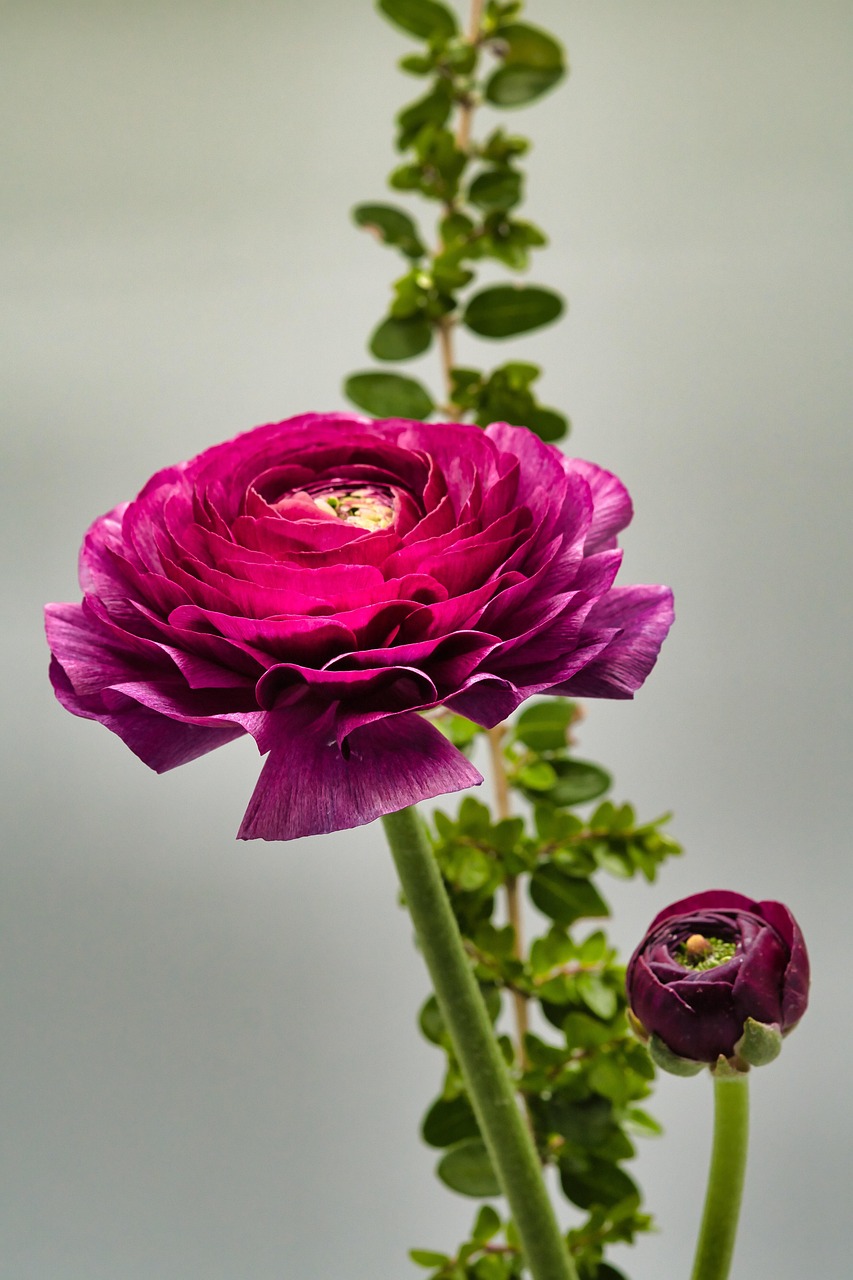
These plants thrive in sunny, warm, and sheltered spots. 🌤️
The soil should be fertile, well-draining, and neutral to slightly acidic (pH 4.5–7).
Most importantly — maintain consistent moisture levels! 💧
Before planting, enrich the soil with organic or liquid fertilizer, such as vermicompost.
Soak the tubers in lukewarm water for several to a dozen hours. If they do not swell, they are not suitable for planting.
Then treat them with a fungicide and plant them 3–5 cm deep, spaced 10–15 × 15 cm apart. 🌿
The ideal planting time is April to May, once the soil reaches at least 10°C. 🌡️
Water regularly but moderately, using settled water at room temperature. 🌡️
Too much water may cause root rot, while too little can lead to bud drop.
The plants need the most water in spring, during the flowering period.
Use a multi-component fertilizer — ideally before blooming begins.
Ranunculus may be attacked by:
scale insects 🪲
aphids 🐜
thrips
slugs 🐌
Use soil treatments and physical barriers (such as copper rings) for control.
Common diseases include fusarium wilt, grey mold, and powdery mildew.
Apply fungicides preventively — preferably early in the growing season.
Weed regularly 🌾
Protect with horticultural fleece during frosts ❄️
Cut the flowers to encourage new bud formation ✂️
After flowering, allow the leaves to dry naturally — this is when the tubers store nutrients.
In September, dig them up, dry them, clean them, and store them in peat or wood shavings in a well-ventilated place at 8–10°C.
They look best when planted in groups on flower beds. 🌼
They pair beautifully with irises, hostas, bleeding hearts, anemones, lupines, coreopsis, and columbines.
They can also be grown in containers on balconies and terraces — in sunny locations. 🌞
In shade, ranunculus may lose their color and drop buds.
They are not suitable as indoor decoration — lack of sunlight harms them.
They are also stunning as cut flowers in wedding bouquets, with a vase life of 4–5 days. 💐
In the past, they were called “ranunkuły” 📜
Persian buttercups are frost-sensitive ❄️
They propagate through tubers, seeds, or rarely cuttings
Seeds can be sown into pots in spring 🌱
‼️ Warning: Ranunculus plants are toxic! 🧤
Their sap may irritate the skin, and ingestion can cause poisoning (abdominal pain, vomiting, diarrhea).
Use caution when growing them, especially around children and pets.


2025

2025