

Hollyhock (Alcea L.) is an impressive plant belonging to the mallow family (Malvaceae).
Depending on the region, it may also be known as common hollyhock, pink hollyhock, garden hollyhock, black hollyhock, tall mallow, or tree mallow. Hollyhocks are usually short-lived perennials most often grown as biennials, although annual varieties also exist. Their height can reach 2–3 meters, and some species grow up to 5 meters! 🌿
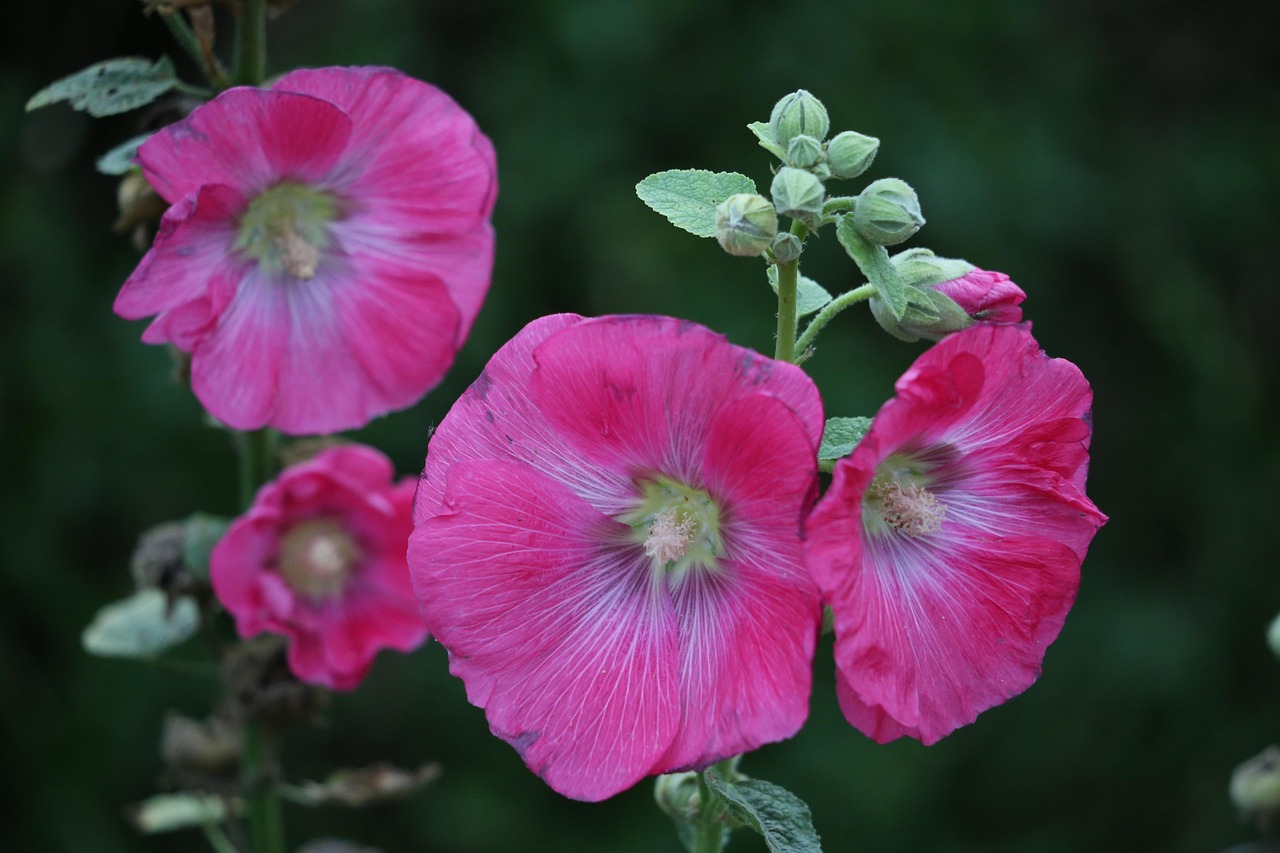
🌺 What do hollyhocks look like?
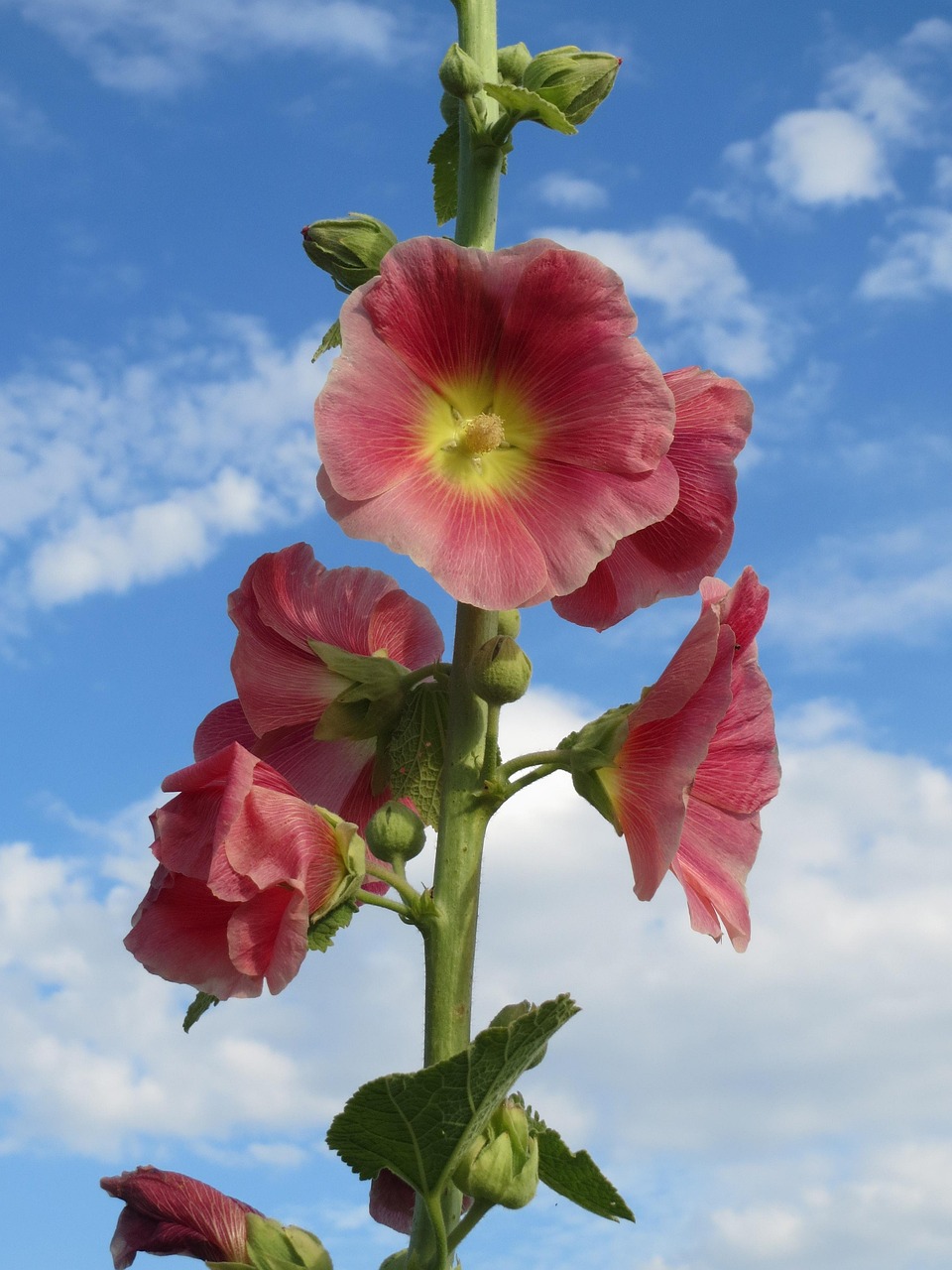
Hollyhocks are characterized by their unbranched, thick, stiff, and hairy stems, which bear large, palmately lobed leaves and beautiful flowers. Their petals can come in many colors:
✅ White
✅ Burgundy
✅ Red
✅ Purple
✅ Cream
✅ Salmon
✅ Orange
✅ Pink
✅ Yellow
Some varieties are bicolored, and one of the most remarkable is the black hollyhock ‘Nigra’, whose flowers appear almost black.
Hollyhock flowers bloom from June to October, and the fruit is a schizocarp containing numerous seeds that remain viable for up to four years!
💡 Fun fact: Hollyhocks originate from the Mediterranean region, although some sources indicate China as the homeland of these plants.
💚 Hollyhocks in medicine and cuisine
Hollyhocks are not just decorative — they also have medicinal and culinary uses. Even Hippocrates appreciated their health-promoting properties!
The ancient Greeks and Romans used the root, leaves, and flowers of hollyhock in both remedies and dishes.
To this day in Syria, a traditional dish is prepared from mallow roots stewed with onions.
Hollyhock root can also be used to flavor halva and to color wines and liqueurs.
🌸 The Most Popular Hollyhock Varieties
Among the many hollyhock varieties, the most widespread is the common hollyhock (Alcea rosea), also known as the garden hollyhock. Several main groups can be distinguished:
-
Double hollyhocks – grow up to 3 m tall and have fully double, pompon-like flowers.
-
Scottish hollyhocks – reach about 2 m and feature hemispherical flowers with petals of equal length.
-
Chater’s group hollyhocks – beautiful, fully double varieties with slim, compact flower spikes.
-
Fimbriata flore pleno (Alleghanies) – semi-double flowers with fringed petals.
Additionally, gardens often feature:
-
Fig-leaved hollyhock (Alcea ficifolia L.)
-
Wrinkled hollyhock (Alcea rugosa) – with pale yellow flowers
-
Pale hollyhock (Alcea pallida)
Some particularly attractive cultivars include:
🌿 ‘Creme de Cassis’ – bicolored flowers
🌿 ‘Budapest’ – deep purple-red flowers
🌿 ‘Maroon’ – chocolate-colored blooms 🍫

🌱 Propagation of Hollyhocks and Seed Sowing
Hollyhocks can be propagated in several ways:
✅ By sowing seeds – in May–June in a seedbed or in pots. Sow the seeds at a depth of about 2 cm.
✅ By dividing the root clump – best done in spring.
✅ By self-seeding – hollyhocks often reseed themselves, producing ready-to-transplant seedlings.
Annual hollyhocks should be sown in March–April so they can bloom in the same year!
🌞 Growing and Caring for Hollyhocks
Hollyhocks are relatively easy to grow, but they do have certain requirements:
-
Soil: fertile, humus-rich, well-drained, pH 6–7
-
Location: sunny or lightly shaded, sheltered from the wind
-
Watering: young plants need more water; older plants should be watered only during droughts
-
Fertilizing: on poorer soils, apply fertilizer 1–2 times during the season
-
Pruning: removing spent flowers encourages further blooming
🚨 Hollyhock Diseases and Pests
The most serious threat to hollyhocks is mallow rust — a fungal disease that appears as white or rusty spots on the leaves. To prevent it:
✅ Avoid excessive watering and wetting the foliage.
✅ Use garlic extract sprays or fungicides.
Pests that attack hollyhocks:
-
Slugs – they eat young plants
-
Mallow flea beetles – leave tiny holes in the leaves
🏡 Hollyhocks in the Garden
Hollyhocks are a classic feature of cottage, romantic, and rustic gardens. They look most beautiful along walls, fences, or planted in single-variety groups. They pair wonderfully with cosmos, verbena bonariensis, delphiniums, echinacea, and climbing roses. 🌿
🌱 Health Benefits of Hollyhock
Hollyhock has anti-inflammatory, expectorant, and soothing properties. Hollyhock tea or infusion is traditionally used for upper respiratory infections, menstrual discomfort, and menopause symptoms. It is also widely used in natural skincare.
☕ Try black hollyhock tea — it soothes the throat and aids digestion!

You may also like
-
 18/02
18/022025
How to Grow and Care for Tuberous Begonias
Begonias belong to the Begoniaceae family. The most commonly cultivated species include the wax begonia, winter begonia, cane begonia, rex begonia, and tuberous begonia. For more details, see the full article!Read more -
 04/02
04/022025
The Ultimate Ranking of Low-Maintenance, Hard-to-Kill Houseplants
Lush potted plants are a stylish and eye-catching decoration that adds charm, warmth, and natural character to any interior. In addition, plants filter and ionize the air, regulate humidity levels, and — according to numerous studies — have a positive impact on our mood. Which houseplants should you choose for your home? Explore our guide below.Read more